
Deciding Whether Equipment Can Be Saved
Fire Extinguisher Repair in Richmond for units showing damage, pressure loss, or discharge issues
A leaking valve after someone bumped the extinguisher with equipment, a cracked hose from years of heat exposure, a pressure gauge stuck in the red zone for unknown reasons—these problems don't always mean the entire unit needs replacement. Repair addresses specific component failures by evaluating whether the cylinder remains structurally sound, whether seals and valves can be replaced, and whether the extinguisher can be recharged to full functionality. First Defense Fire Extinguisher and Safety diagnoses and repairs fire extinguishers in Richmond when businesses discover equipment that is damaged, improperly pressurized, or otherwise questionable. Technicians determine whether repair makes sense or whether the unit has deteriorated beyond safe service life and requires full replacement.
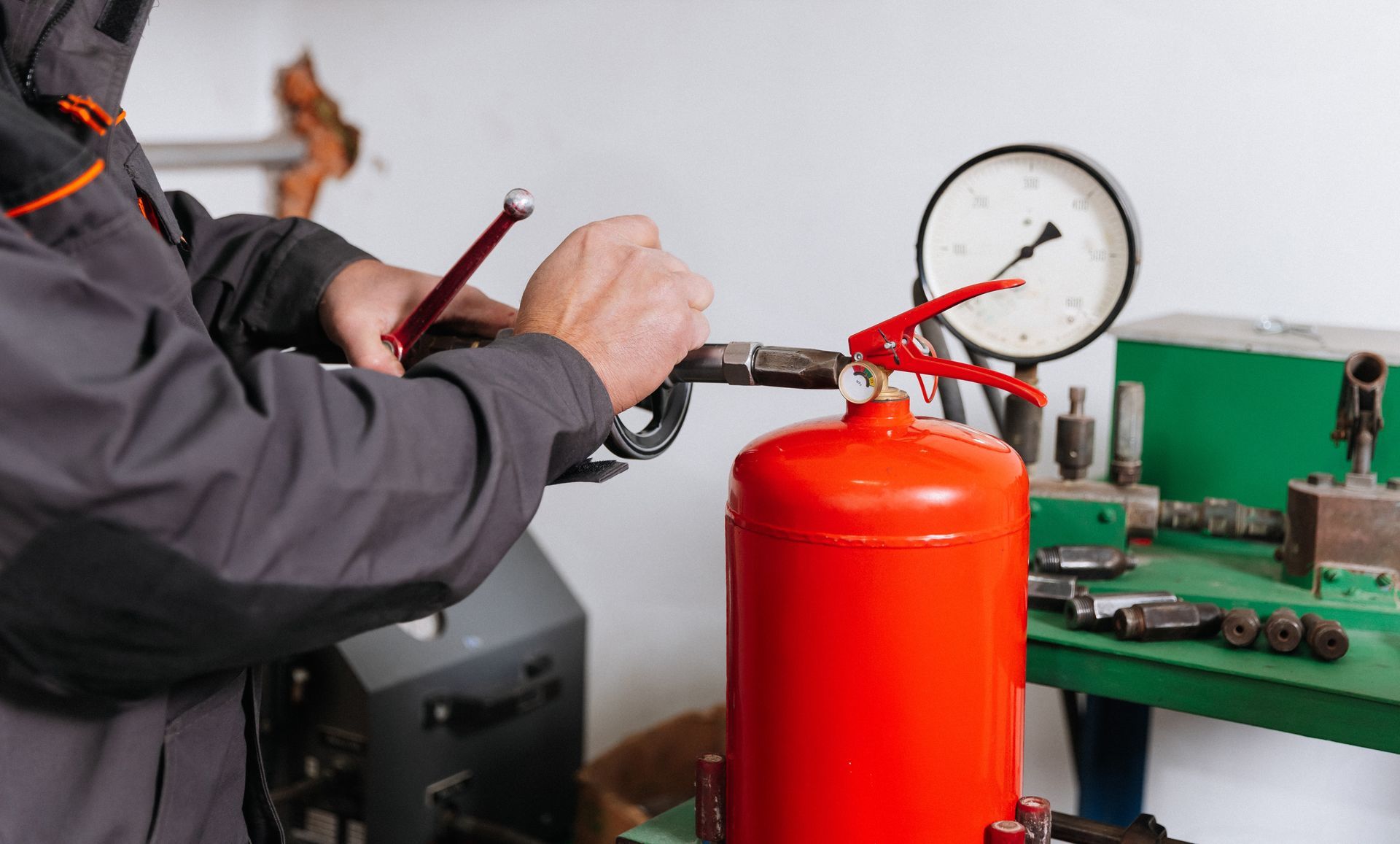
The evaluation process involves pressure testing the cylinder to check for leaks, examining the valve assembly for corrosion or mechanical failure, inspecting the siphon tube inside the cylinder for blockages or damage, and reviewing the unit's age and service history to determine if continued use is appropriate. Extinguishers that have been partially discharged, dropped from their mounting brackets, or exposed to corrosive environments often need more than simple recharging—they require component replacement or internal cleaning before they can return to service.
Request an evaluation if any extinguisher in your facility shows visible damage, pressure irregularities, or signs of previous discharge that weren't properly documented.
What Repair Involves and When Replacement Makes Sense
Technicians disassemble the extinguisher to access internal components, replace worn or damaged parts such as valve stems, O-rings, hoses, and discharge nozzles, clean the interior to remove agent residue or contamination, and reassemble the unit with new seals and a fresh charge of extinguishing agent. The repaired extinguisher undergoes pressure testing to confirm it holds pressure without leaks and that the discharge mechanism operates smoothly when the handle is squeezed.
After repair, the extinguisher functions identically to a new unit, displaying proper pressure, a clean discharge path, intact safety seals, and an updated service tag indicating the work performed. Facilities that address repair needs promptly avoid the compliance gaps that occur when damaged extinguishers sit out of service for weeks, and they prevent situations where employees attempt to use non-functional equipment during an actual fire emergency.
Some extinguishers cannot be repaired safely—units with severe cylinder corrosion that compromises structural integrity, extinguishers manufactured before modern safety standards were implemented, and models using obsolete agent types that are no longer serviceable must be replaced rather than repaired. Technicians provide clear recommendations about whether repair is viable based on the specific condition of each unit rather than automatically defaulting to replacement.
Questions Before Starting Your Project
Business owners in the Richmond area often need guidance on repair timelines, cost considerations, and how to handle extinguishers that are out of service temporarily.
What problems can be repaired versus which ones require replacement?
Repairable issues include valve leaks, hose cracks, pressure loss from slow leaks, and contaminated agent, while unrepairable conditions include significant cylinder rust, structural damage from impacts or drops, and age-related deterioration beyond the manufacturer's service life.
How long does a typical repair take?
Simple repairs like replacing a valve seal or recharging a unit that lost pressure can be completed in one service visit, while more extensive work requiring parts ordering or internal cleaning may take several days depending on parts availability and the extent of the damage.
What should we do with the extinguisher location while the unit is being repaired?
A temporary replacement extinguisher should be installed in that location to maintain fire protection coverage, especially in high-risk areas like kitchens, mechanical rooms, or near flammable storage.
When does it make more financial sense to replace rather than repair?
Extinguishers that require multiple component replacements, units nearing the end of their recommended service life, and models that have been repaired repeatedly often cost nearly as much to fix as purchasing a new unit with a full service life ahead.
How do Houston-area environmental factors contribute to extinguisher damage?
High humidity accelerates internal corrosion in steel cylinders, temperature extremes near loading docks or outdoor installations cause seal degradation, and exposure to chemicals in industrial facilities can damage hoses and valve components faster than in controlled office environments.
First Defense Fire Extinguisher and Safety provides honest assessments about whether repair is appropriate or whether replacement is the better long-term solution for your facility. Contact us to request a diagnostic evaluation for any extinguisher showing signs of malfunction or damage.