
Equipment That Actually Works During Emergencies
Annual Inspections in Richmond for commercial properties facing compliance and safety requirements
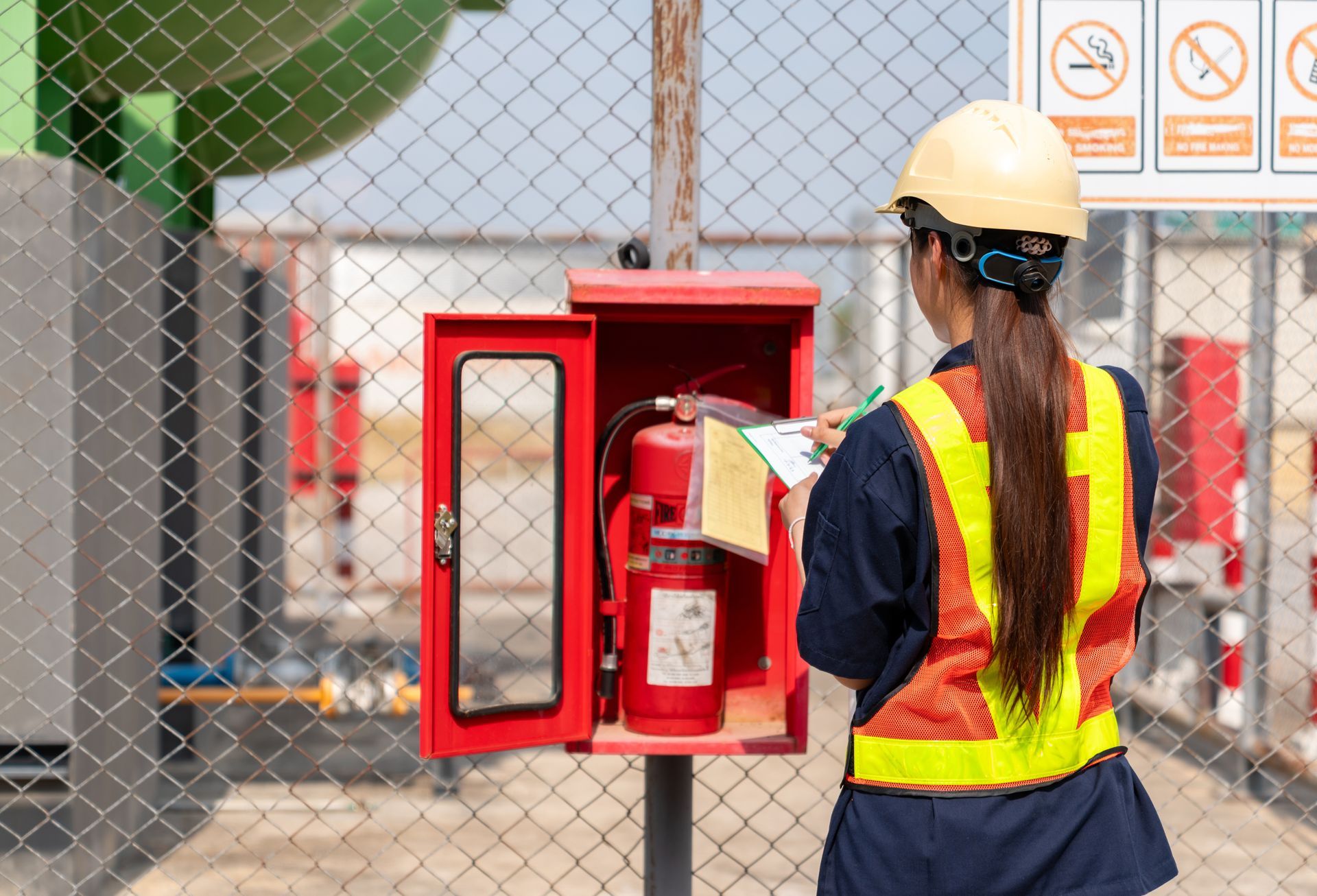
Fire extinguishers sit mounted on walls for months or years without being touched, yet they're expected to function perfectly the moment someone pulls the pin during an emergency. First Defense Fire Extinguisher and Safety performs annual inspections in Richmond for businesses and organizations that need to verify their equipment will actually discharge when required. Each inspection evaluates pressure levels, physical condition, accessibility, and documentation to identify problems before a fire marshal notices them or an employee discovers a non-functional extinguisher during a real fire.
The inspection process involves checking the pressure gauge to confirm the unit maintains proper charge, examining the hose and nozzle for cracks or blockages, verifying that safety seals and tamper indicators remain intact, and confirming that the extinguisher is mounted at the correct height with clear signage. Technicians also review service tags to track maintenance history and ensure the unit hasn't exceeded its service interval. For commercial properties in the Houston area, inspections also account for placement relative to high-temperature equipment, cooking surfaces, electrical panels, and other specific hazards that affect extinguisher type requirements.
Schedule an annual inspection to document compliance and verify that every extinguisher in your facility is accessible and ready for use.
What the Inspection Process Actually Covers
Technicians examine each extinguisher's physical components, including the cylinder body for dents, corrosion, or damage that could compromise structural integrity during discharge. The inspection also confirms that instruction labels remain legible, that the unit is positioned where employees can reach it without obstruction, and that the pull pin moves freely without excessive corrosion. Any extinguisher showing low pressure, a broken seal, or a missing inspection tag gets flagged for immediate service or replacement.
After the inspection, you receive updated service tags on each unit, documentation showing which extinguishers passed and which need attention, and a clear record that satisfies fire marshal requirements and insurance audits. Buildings with aging extinguishers often discover during inspection that units have lost pressure gradually, that mounting brackets have loosened, or that previous service records are incomplete or missing entirely.
The inspection also notes whether extinguisher placement still makes sense based on your current operations—kitchens that have added cooking equipment, warehouses storing different materials, or office spaces reconfigured since the last inspection may need additional units or different extinguisher types in specific zones. First Defense Fire Extinguisher and Safety provides recommendations based on observed conditions rather than simply checking a box on a compliance form.
Common Questions About This Service
Richmond businesses often ask about inspection timing, what triggers a failed inspection, and how to prepare their facilities before technicians arrive.
What happens if an extinguisher fails the annual inspection?
The unit is removed from service immediately and either repaired, recharged, or replaced depending on the specific issue, and you receive a loaner extinguisher to maintain coverage in that location until the permanent unit is ready.
How long does an inspection take for a typical commercial building?
A facility with ten to fifteen extinguishers usually requires about an hour, though buildings with multiple floors, restricted access areas, or dozens of units across a large footprint take longer to complete thoroughly.
What should we do to prepare for the inspection?
Verify that extinguishers are not blocked by furniture, equipment, or inventory, and ensure technicians can access locked areas, stairwells, mechanical rooms, and other spaces where extinguishers are mounted.
Why do some extinguishers fail inspection even though they look fine?
Pressure loss happens gradually and isn't visible from the outside, safety seals can break without obvious signs of tampering, and internal corrosion or moisture contamination only shows up during professional examination of the gauge and valve assembly.
When is the best time to schedule annual inspections in the Houston area?
Many businesses schedule inspections during slower operational periods to minimize disruption, though the actual requirement is based on the date of the last inspection rather than a specific calendar month.
First Defense Fire Extinguisher and Safety schedules inspections around your operational needs and provides documentation that holds up during audits and regulatory reviews. Request an inspection appointment to verify your equipment meets current standards and functions as expected.