
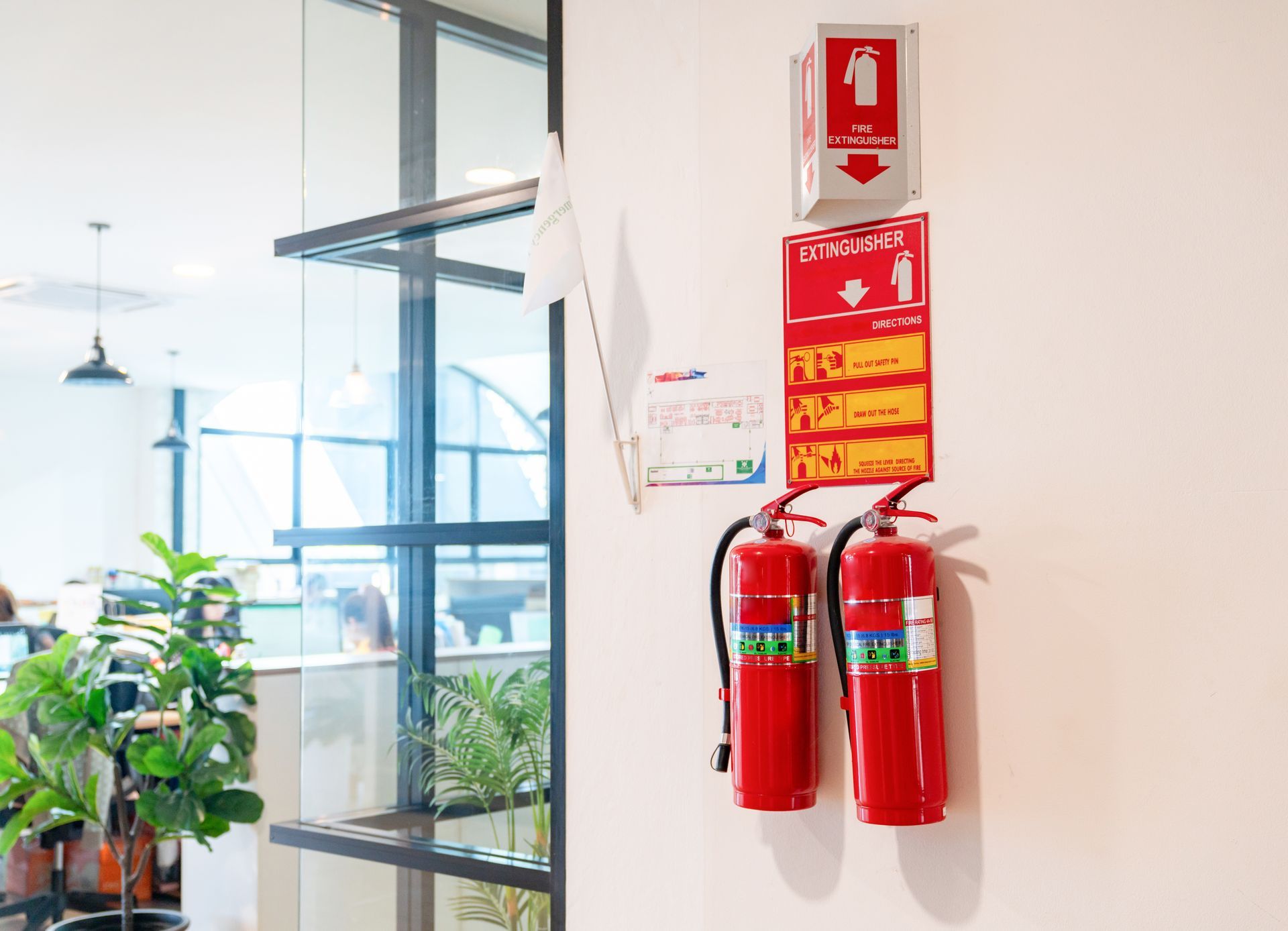
Placement That Supports Emergency Response
Fire Extinguisher Installs in Richmond for businesses equipping new facilities or updating coverage in existing buildings
Commercial kitchens need Class K extinguishers within reach of cooking surfaces, electrical rooms require non-conductive agents near breaker panels, and warehouses storing flammable materials need coverage that employees can access without crossing through the hazard zone during a fire. First Defense Fire Extinguisher and Safety installs fire extinguishers for businesses and facilities in Richmond that need equipment positioned where it will actually be used during an emergency. Installation involves more than drilling a mounting bracket into the nearest wall—it requires evaluating travel distances, identifying specific fire hazards in each area, and ensuring extinguishers remain visible and accessible even when the space is full of people, inventory, or equipment.
Professional installation accounts for the type of materials in each zone, the height and visibility of the mounting location, and whether the path to the extinguisher remains clear during normal operations. Technicians mount units at the correct height to meet fire code requirements, install signage that makes extinguishers visible from multiple angles, and verify that the selected extinguisher type matches the combustibles present in that part of the building. For facilities near Richmond with multiple operational areas, installation planning also determines how many extinguishers the space needs based on square footage and travel distance requirements.
Request installation service to position new extinguishers or relocate existing units that no longer align with current operations and fire hazards.
How Proper Placement Supports Emergency Readiness
The effectiveness of a fire extinguisher depends on whether someone can reach it within seconds, operate it without crossing through flames or smoke, and apply the right agent to the specific fire type. Installation addresses these factors by placing extinguishers near exits so employees can fight small fires while maintaining a clear escape route, mounting units away from high-traffic collision zones that could damage equipment, and selecting locations that don't require employees to search multiple rooms during an emergency.
After installation, each extinguisher is mounted securely with the top handle positioned between three and a half and five feet from the floor, visible identification signage is posted, and the area around the unit remains clear of obstructions. Facilities that have expanded their operations often discover during installation that their original extinguisher layout no longer provides adequate coverage, that new equipment has blocked access to existing units, or that recent renovations have created fire hazards in areas that lack nearby extinguishers.
Installation also includes documenting extinguisher locations in a site plan, attaching initial service tags, and providing staff with information about where equipment is positioned and what type of fires each unit is designed to handle. Thoughtful placement reduces response time during an emergency and ensures employees don't waste critical seconds searching for equipment or attempting to use the wrong extinguisher type on an incompatible fire.
Answers to Frequent Service Questions
Commercial property owners in the Houston area often ask about placement requirements, extinguisher types, and how installation fits into broader fire safety planning.
What determines where extinguishers should be installed?
Fire code specifies maximum travel distances to the nearest extinguisher, typically seventy-five feet for most commercial spaces, with shorter distances required near high-hazard areas like kitchens, mechanical rooms, and flammable storage locations.
How do you decide which extinguisher type to install in each area?
Class A extinguishers handle ordinary combustibles like wood and paper, Class B covers flammable liquids, Class C addresses electrical fires, and Class K is required for commercial cooking equipment, so the hazards present in each zone dictate the appropriate agent and size.
When should a business consider adding extinguishers beyond the minimum code requirement?
Properties with large open floor plans, facilities that store high-value inventory, and buildings where employees work in isolated areas benefit from additional extinguishers that reduce travel distance and provide backup coverage if one unit is discharged.
What mounting considerations apply to Richmond-area industrial facilities?
Warehouses with forklift traffic need extinguisher cabinets or protective barriers to prevent collision damage, outdoor installations require weather-resistant cabinets, and spaces with extreme temperature fluctuations may need specialized extinguisher models rated for those conditions.
What happens after the installation is complete?
You receive documentation showing extinguisher locations and types, service tags indicating the installation date, and recommendations for ongoing inspection and maintenance schedules based on your facility's operations and fire risks.
First Defense Fire Extinguisher and Safety evaluates your facility layout, fire hazards, and operational needs before recommending specific extinguisher types and installation locations. Schedule an installation consultation to discuss equipment placement for your property.